
From Cleanup Projects to Continuous Control
Rethinking supplier master data in Oracle Fusion. AP teams know the issues are there. What they often lack is a repeatable way to see them, prioritise them and keep them from coming back.

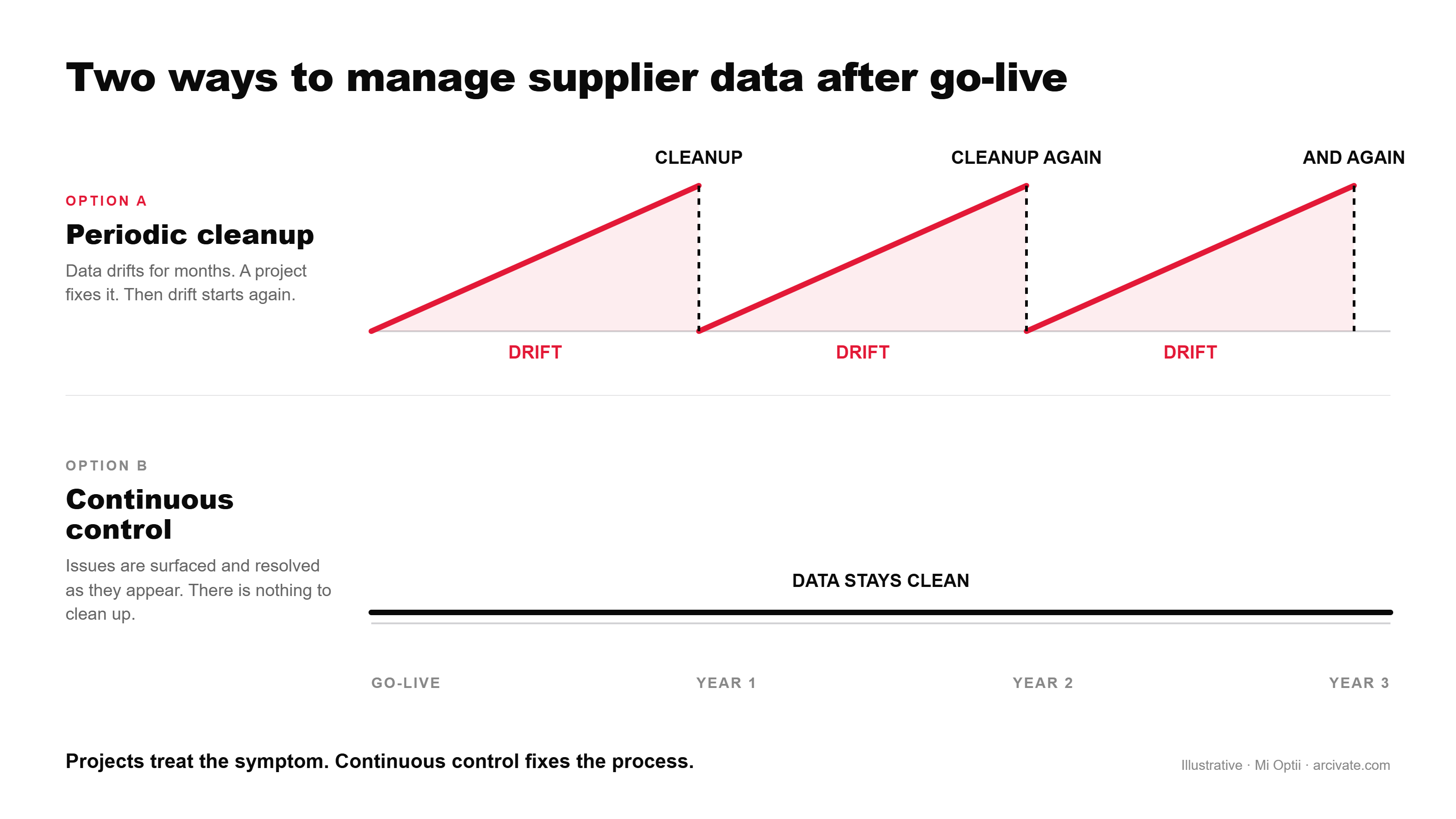
Supplier data changes continuously. A cleanup project captures one point in time.
Inactive suppliers, duplicate records, stale contact details and outdated tax information build up over time in almost every Oracle environment.
The real problem is not knowing those issues exist. It is having the visibility and control to know what needs attention, what matters most and what is getting worse.
Those issues are often scattered across the system, buried in reports or only discovered when someone goes looking for them. The larger issue is that many organisations do not have a repeatable system for managing them.
Eventually, those data issues show up in the KPIs AP is measured on. Processing time, exception rates, invoice holds, supplier accuracy and compliance targets all become harder to manage when the records underneath are wrong or out of date.
A cleanup project only fixes what has already accumulated. The day it finishes, the data starts changing again. New suppliers are added, records go out of date, documents expire and new issues appear.
Where inactive suppliers come from
Inactive suppliers are a useful example because almost nobody creates one on purpose. They accumulate through normal business activity.
Each event is understandable on its own. Over time, the result is a growing set of records that can still appear active, show up in searches or be selected when they should have been reviewed.
This is the kind of accumulation Mi Optii is designed to surface, giving teams a clearer view of inactive suppliers and inactive purchase orders and, where appropriate, tools to bulk end-date or close applicable records directly in Oracle.
What continuous control actually requires
Finding bad data is the first step, not the last. A repeatable process also has to determine what needs attention, which issues matter most, whether action is required, who owns the fix and what happens after the issue is resolved.
Most AP teams already do parts of this. The problem is that the work is often spread across Oracle reports, spreadsheets, manual reviews and whichever team member happens to know where to look.
Where Mi Optii fits
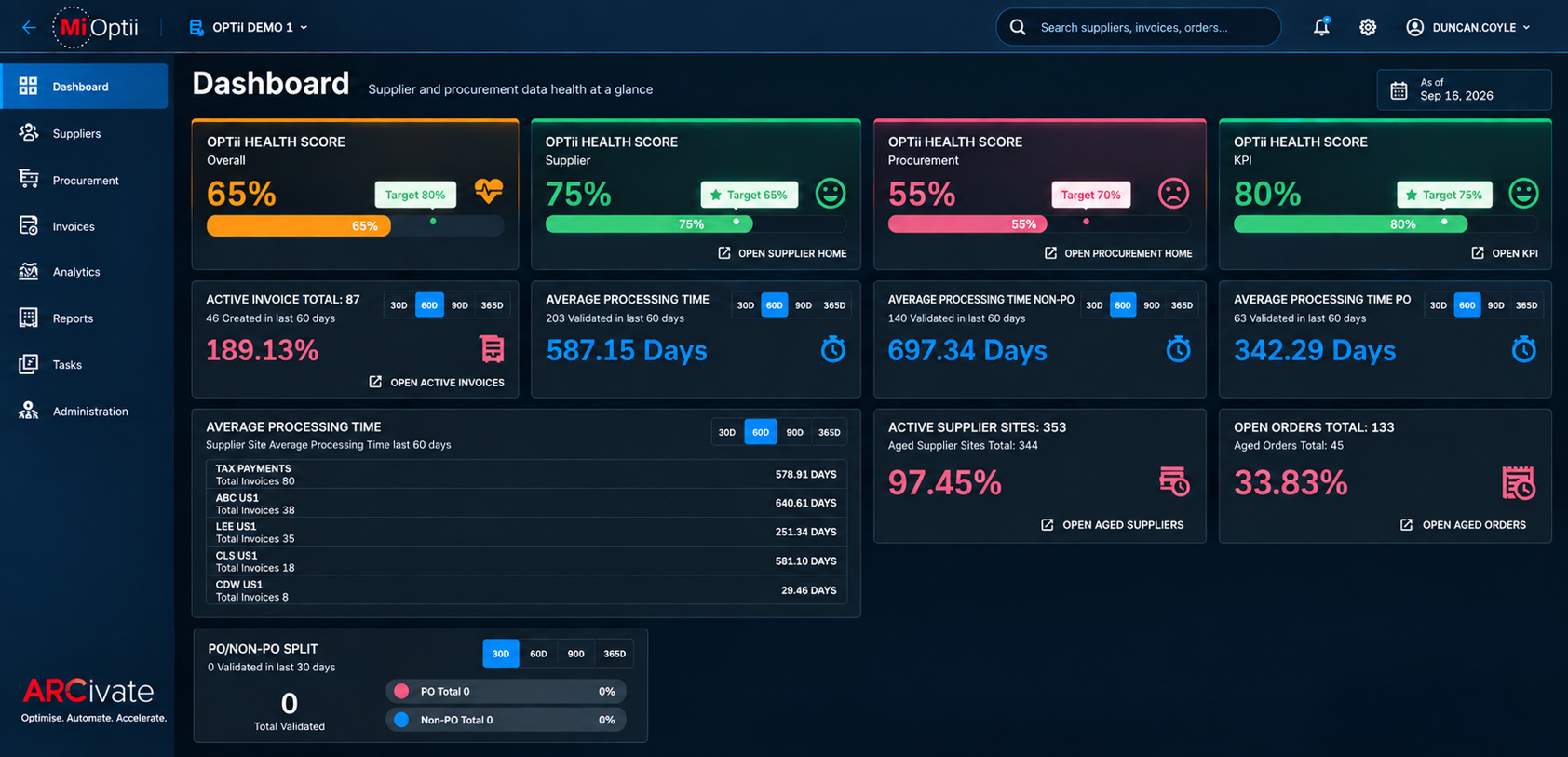
Mi Optii supports that operating model by bringing supplier, purchase order and invoice conditions into one operational view. It helps AP and finance teams see what needs attention, prioritise the work, review what has changed and take action on applicable records directly in Oracle.
- Surface inactive suppliers and purchase orders. Review what has gone quiet or remained open and determine what needs action.
- See active invoice backlog. Surface active invoices that have not reached validation so AP can prioritise workload.
- Review history and ownership. See update history and identify who last touched an invoice.
- Act on applicable records. Bulk end-date or close supported supplier and purchase order records directly in Oracle after review.
- Open the underlying Oracle record. Deep links take users directly to the relevant supplier or purchase order record.
- Keep monitoring after the cleanup. Move from a periodic project to a repeatable operating rhythm.
Support upgrades and migration projects with better data visibility
Oracle upgrades and migration projects create a natural point to review supplier master data, purchasing records, tax information and invoice conditions. Mi Optii gives project and operational teams a clearer view of the data that needs review before, during and after change.
The question worth asking
Many AP leaders have already been through a cleanup. Some have been through several. The useful question is not whether the last project worked. It is what has happened to the data since.
If the honest answer is "we are not sure," that is not just a data problem. It is a control gap.
Mi Optii, master data management and Oracle P2P
Why is a one-off supplier data cleanup not enough?
Supplier data continues to change after a cleanup. New suppliers are added, records become inactive, documents expire and new exceptions appear, so ongoing visibility and control are needed.
How can Mi Optii support Oracle upgrades and migration projects?
Mi Optii helps teams surface supplier, purchase order, tax and invoice conditions before and after change programmes, giving AP and finance teams a clearer operational view of data that needs review.
What procure-to-pay visibility does Mi Optii provide?
Mi Optii brings supplier, purchase order and invoice conditions into one view, including health scores, inactive records, active invoice backlog, ownership history and deep links to underlying Oracle records.
Does Mi Optii replace Oracle ERP Financials?
No. Mi Optii works with Oracle Fusion ERP Cloud to surface operational conditions and provide visibility that is difficult to assemble consistently through separate reports and spreadsheets.
See what has happened to your data since the last cleanup.
Connect a test environment, review your Oracle Fusion supplier data with Mi Optii, then connect production.