


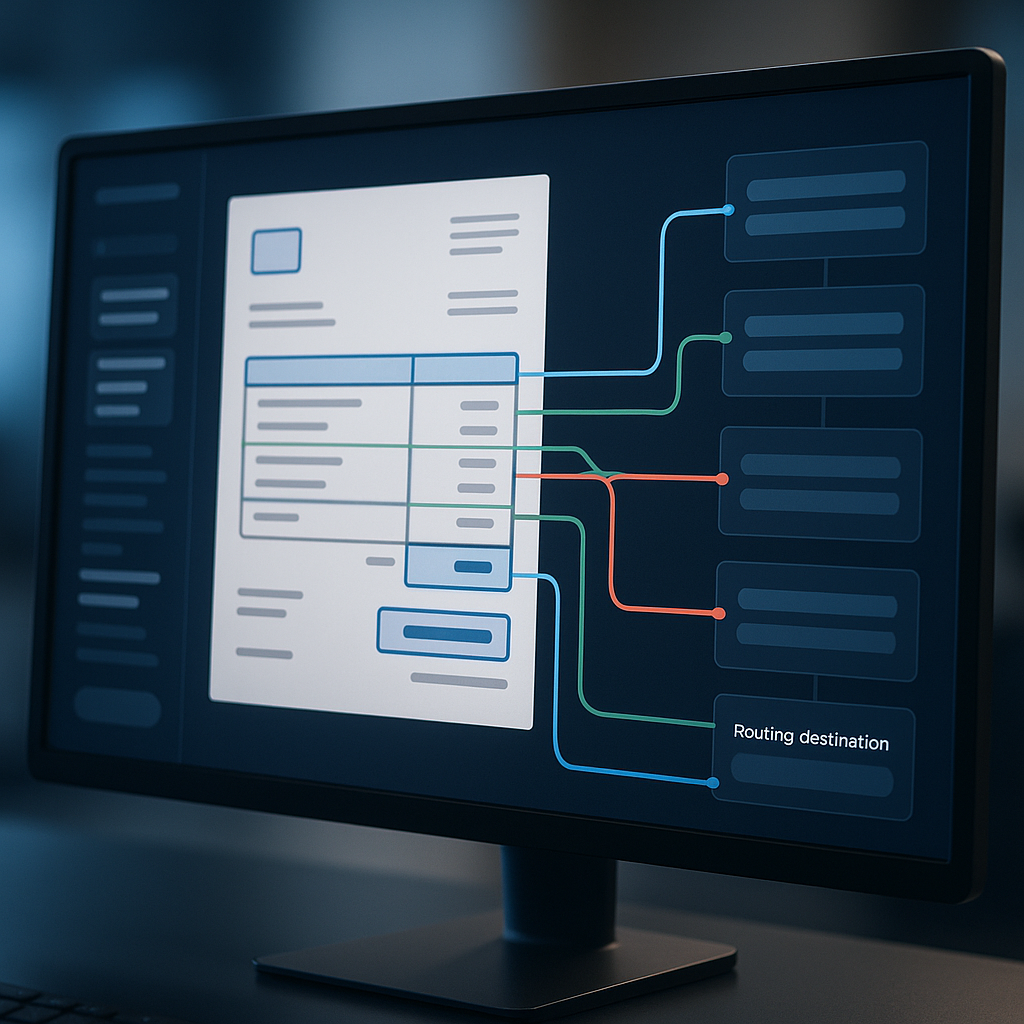
Why Invoice Processing Is the Front Line of B2B Payment Fraud
When organisations talk about B2B payment fraud, the conversation often centres on cybercrime, email security, or bad actors outside the business. In reality, the most common entry point for fraud is far more mundane—and far more familiar: the invoice.
Invoices sit at the heart of the accounts payable process. They trigger payments, drive cash outflow, and touch multiple systems and people along the way. That makes invoice processing the single most attractive attack surface for fraudsters—and one of the most overlooked areas of risk.
As invoice volumes grow, workforces become more distributed, and pressure on finance teams increases, the cracks in traditional invoice processing models are becoming harder to ignore.
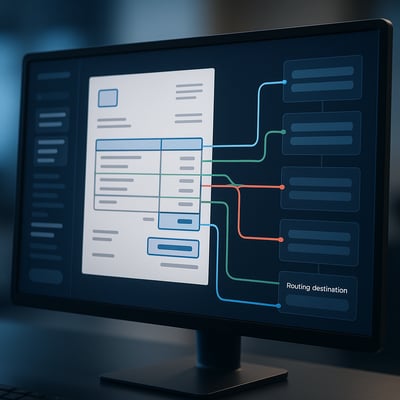
Fraud Doesn’t Bypass Invoice Processes—It Exploits Them
Most modern B2B payment fraud does not involve sophisticated system breaches. Instead, it exploits everyday weaknesses in how invoices are received, validated, approved, and paid.
Fake or manipulated invoices slip through when validationis inconsistent.
Supplier bank details are changed when controls rely on emails or invoice data alone.
Urgent payment requests succeed when approval workflows are informal or opaque.
Business Email Compromise (BEC), payment diversion, and account takeover schemes are all, at their core, invoice-centric attacks. They rely on familiarity with invoice formats, timing, and internal AP processes. Fraudsters understand that invoice processing is often manual, high-volume, and under-resourced—and they design their attacks accordingly.
The Hidden Risk in “Business as Usual” Invoice Processing
Many organisations still rely on fragmented invoice intake channels, manual data entry, and trust-based approvals. These practices persist not because finance teams are careless, but because invoice processing has traditionally been viewed as an operational task rather than a strategic risk area.
This creates several structural vulnerabilities:
 Invoices arriving via multiple uncontrolled channels
Manual keying errors that mask fraudulent changes
Limited matching against purchase orders or contracts
Supplier master data updates triggered by invoice content
Poor visibility into who touched an invoice and when
Supplier Portal – allowing suppliers to update contact details
Individually, these may seem manageable. Collectively, they create an environment where fraud can blend in with normal processing noise—often remaining undetected until funds are gone.
Why Invoice Automation Is Becoming a Fraud-Control Strategy
Invoice automation is often justified on efficiency and cost savings alone. But increasingly, its real value lies in risk reduction.
Automated invoice processing introduces discipline into aprocess that has historically relied on human judgement under pressure. It enforces consistency, embeds controls, and creates transparency across the invoice lifecycle.
Automation helps organisations:
Capture invoice data accurately and consistently
Enforce matching and validation rules without exception
Prevent invoices from bypassing approval workflows
Maintain immutable audit trails for every action taken
Gain real-time visibility into invoice status and anomalies
In other words, automation doesn’t just make invoiceprocessing faster—it makes it safer.
 Securing Invoice Processing by Design, Not After the Fact
The most effective fraud prevention strategies are not bolt-on controls or post-payment checks. They are embedded directly into invoice processing itself.
This means designing AP processes where:
Invoices are received through controlled, centralised channels
Supplier data changes require independent verification
Segregation of duties is enforced by the system, not policy alone
Exceptions are visible, traceable, and reviewable in real time
When invoice processing is structured this way, fraud becomes harder to execute and easier to detect.
🌐How Modern Invoice Automation Supports This Shift
Solutions such as Arcivate’s Mi Invoices reflect this shift from reactive fraud detection to proactive fraud prevention.
By automating invoice capture, workflow, and integration with Oracle ERP platforms, Mi Invoices reduces manual intervention while increasing control. Self-learning capture technology improves data accuracy across diverse invoice formats, while real-time visibility and full audit trails provide finance teams with the insight they need to identify irregularities early.
Just as importantly, these controls remain effective in hybrid and remote working environments—where traditional, office-based checksare no longer viable.

⚡Rethinking the Role of Accounts Payable
Invoice processing is no longer just a back-office function. It is a control point for cash flow, compliance, and organisational trust.
As fraud becomes more targeted and more invoice-driven, organisations that continue to rely on manual AP processes will find themselves increasingly exposed. Those that treat invoice processing as a strategic control function—supported by automation—will be better positioned to protect their finances and their reputation.
The question is no longer whether invoice automationimproves efficiency.
It’s whether organisations can afford to manage fraud risk without it.
📈 How Arcivate’s Mi Invoices Solution Mitigates Fraud Risks
Arcivate's Mi Invoices solution offers a comprehensive approach to mitigating fraud risks through automated invoice processing. Key features of Mi Invoices include:
✔ Automated Capture and Processing: Mi Invoices automates the capture, imaging, workflow, and straight-through processing of supplier invoices. This reduces manual data entry and lowers the risk of human errors.
✔ Non-Template Self-Learning Capture Technology: The solution uses advanced technology to accurately capture invoice data without relying on templates, enhancing data accuracy and reducing the risk of manipulation.
✔ Seamless Oracle Integration: Mi Invoices integrates seamlessly with Oracle ERP Cloud (Fusion) and Oracle E-Business Suite, ensuring smooth and secure data flow between systems.
✔ 24/7 Visibility and Audit Trails: The solution provides real-time visibility into the invoice lifecycle and maintains comprehensive audit trails, helping businesses detect and address any suspicious activities promptly.
✔ Support for Hybrid Working: Mi Invoices is scalable for hybrid and remote working environments, ensuring secure and efficient invoice processing regardless of location.
By implementing Arcivate's Mi Invoices solution, businesses can enhance their payment security and significantly reduce the risk of B2B payment fraud.
Case Studies: Successful Implementation of Invoice Automation
Real-world examples highlight the effectiveness of invoice automation in preventing B2B payment fraud. Here are a few case studies:

Case Study 1: Financial Services Company: A financial services company implemented Arcivate's Mi Invoices solution to automate their invoice processing. The result was a significant reduction in manual data entry errors and faster invoice processing times. The company also experienced improved compliance and auditability, leading to enhanced payment security.
Case Study 2: Manufacturing Firm: A manufacturing firm faced challenges with manual invoice processing and frequent payment discrepancies. After deploying Mi Invoices, the firm saw a drastic reduction in payment errors and improved visibility into its payment processes. This led to better fraud detection and prevention.
Case Study 3: Public Sector Organisation: A public sector organisation adopted Mi Invoices to streamline its accounts payable operations. The solution's seamless integration with Oracle ERP Cloud enabled efficient data flow and robust audit trails. The organisation reported increased efficiency and reduced fraud risks.
These case studies demonstrate the tangible benefits of implementing invoice automation solutions like Arcivate's Mi Invoices in enhancing payment security and preventing B2B payment fraud. By leveraging advanced technology and best practices, businesses can protect themselves against fraud and ensure efficient, secure payment processes.


